Blind Dosing Is Expensive: How Real-Time Microbial Intelligence Reduces Chlorine Costs
Introduction In industrial water systems, chlorine is insurance. It protects process water, storage tanks, and distribution lines from microbial growth. It keeps production safe and compliant. But in many facilities, chlorine dosing is still based on assumption rather than evidence.
Operators dose conservatively because they cannot see what is happening biologically inside their systems. If microbial data takes two to three days to arrive from the lab, then dosing decisions are made without visibility. That means blind dosing.
Blind dosing is not only inefficient. It is expensive.
The Cost of Overdosing In food and beverage production, chlorine budgets can reach millions per year. The instinct is simple: dose slightly more to ensure compliance. No one wants a microbial failure, a batch recall, or regulatory scrutiny. But over time, excessive chlorine use carries real consequences.
High dosing increases chemical costs directly. It also increases water use, because higher residuals require additional rinsing. Energy consumption rises when more heated water or extended cleaning cycles are needed. In addition, overexposure to chlorine accelerates corrosion in metal infrastructure and degrades membranes and seals. Equipment life shortens. Maintenance intervals tighten. Capital replacement arrives earlier than expected.
All of this happens quietly. It is rarely linked back to dosing strategy because microbial visibility is limited.
The Risk of Underdosing The opposite problem is just as costly. When chlorine residual drops below what is needed, microbial regrowth can occur. In food and beverage lines, that can mean biofilm formation, quality deviations, and potential contamination events.
Microbes respond quickly to changes in flow, temperature, and stagnation. A short period of low residual during production downtime can shift biological conditions significantly. Without real-time monitoring, operators do not see this shift until laboratory results confirm it days later.
By then, production may already be affected.
Why Traditional Monitoring Falls Short Most facilities still rely on grab samples and laboratory culture methods to assess microbial load. These methods are accurate, but they are slow. Results often arrive long after operational decisions have been made.
Online chlorine sensors measure residual levels, but they do not measure biological activity. Residual chlorine does not always correlate directly with microbial load, especially in systems with variable organic content or biofilm presence.
As a result, dosing decisions are based on incomplete information. Operators adjust chlorine levels without knowing whether bio-load actually requires it.
From Blind Dosing to Intelligent Dosing The missing piece is real-time microbial visibility.
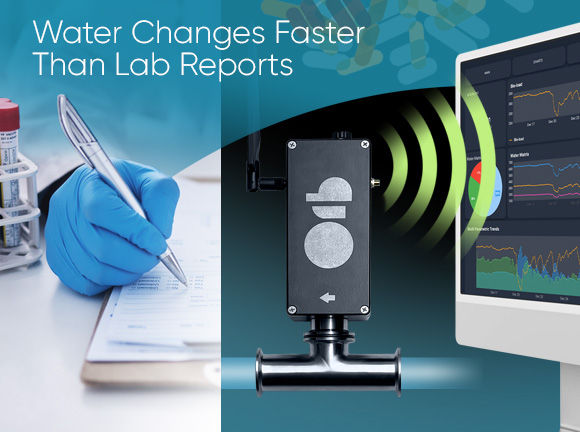
Orb provides a Microbial Intelligence Layer that continuously tracks biological activity inside industrial water systems. Instead of assuming chlorine demand, operators can see how bio-load changes in response to operational conditions.
This transforms dosing strategy.
When microbial activity is low and stable, chlorine can be optimized rather than maximized. When biological signals begin to rise, dosing can be increased precisely and only where necessary. Cleaning cycles can be validated against actual microbial reduction rather than predefined time windows.
Dosing becomes data-driven rather than precautionary.
Financial Impact for Industrial and F&B Operators In large food and beverage facilities, the cost of blind sanitation is not theoretical. One major beverage producer reported that daily fixed sanitation cycles result in up to 16 percent throughput loss. That is production time that cannot be recovered.
When cleaning cycles are scheduled based on precaution rather than real microbial conditions, lines are stopped longer than necessary. Each additional hour of sanitation reduces daily output, increases energy demand, and consumes additional chemicals and rinse water.
Real-time microbial intelligence changes that equation. When operators can validate that bio-load has been reduced to acceptable levels, sanitation can stop when it is complete, not when a predefined timer expires. Over time, aligning sanitation duration with actual biological need directly improves throughput, lowers chemical consumption, and reduces the associated energy required for chemical production and dosing.
Chlorine production is energy intensive. Every unnecessary kilogram carries embedded energy and associated carbon impact. Optimizing dosing and cleaning cycles therefore improves operational efficiency while also reducing the environmental footprint of production.
Throughput regained is revenue regained. Energy avoided is carbon avoided.
Operational Control and Compliance
For operators, the benefit is not only economic. Real-time microbial intelligence supports better documentation and stronger compliance. Continuous biological data demonstrates that treatment performance is stable and effective.
Instead of relying solely on periodic lab confirmation, facilities gain operational confidence. Deviations can be detected early. Root causes can be identified more quickly. Corrective actions can be applied before small biological shifts become quality incidents.
Chlorine as a Precision Tool, Not a Safety Blanket Chlorine remains an essential part of industrial water treatment. The goal is not to reduce protection. The goal is to apply it precisely.
When microbial behavior becomes visible in real time, chlorine shifts from being a blunt safety margin to a controlled and optimized tool. Over time, this precision improves both safety and efficiency.
Better data leads to better dosing decisions.
Conclusion: Visibility Drives Savings Water driven industries cannot afford to operate with biological blind spots. Blind dosing wastes chemicals, shortens asset life, and reduces operational efficiency. Underdosing increases risk and potential production losses.
Real-time microbial intelligence closes this gap. It allows operators to understand when chlorine is needed, how much is required, and when conditions are stable enough to optimize.
For industrial and food and beverage operators, this is not just about microbiology. It is about operational performance, asset protection, and measurable cost savings.
Chlorine is money. Visibility protects both.